
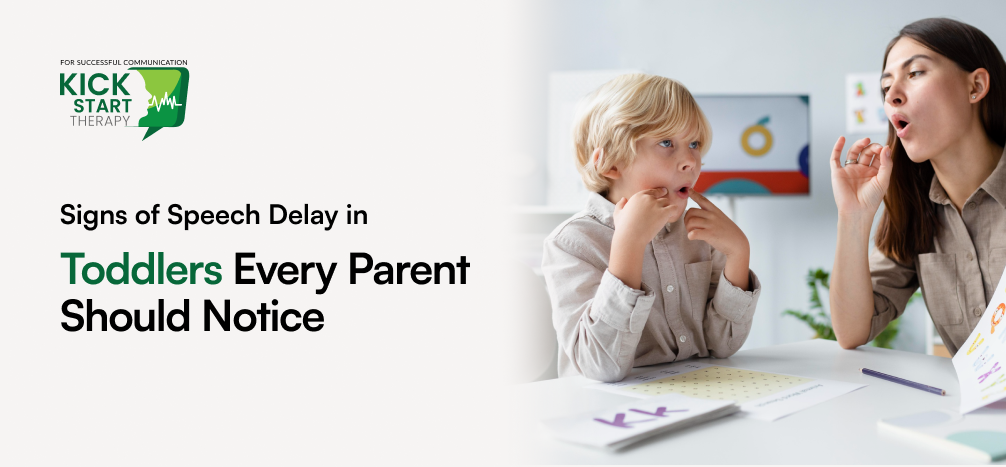
Speech development is one of the first ways a toddler starts to socialize with people around them. Be it through gestures, sounds, or early words, they learn how to express themselves. Although not every child follows a fixed timeline, there are some communication milestones that help parents determine whether their child is progressing as expected. But when these milestones are consistently missed, it points towards signs of speech delay in toddlers.
Many early symptoms of speech delay are subtle and are easy to overlook, especially when a toddler is active and seems to understand everything happening around them. Parents often believe in “wait and watch,” but it can sometimes delay timely support.
This guide is here to help parents identify the key signs of speech delay in toddlers, understand what is considered typical development, and know when it may be helpful to seek professional advice.
Clear Signs of Speech Delay in Toddlers (By Age Group)
Speech and language skills develop in a predictable flow, even though the pace may vary from child to child. Looking closely at age-specific milestones helps identify when development is slowing down. Below are clear, clinically observed signs of speech delay in toddlers grouped by age.
Signs Between 12–18 Months
Between 12 and 18 months, toddlers are expected to move from making sounds to using them with intention. This is the stage where communication becomes more purposeful.
Lack of Meaningful First Words
By this stage, toddlers usually use a few words with purpose. When sounds like “mama” or “dada” are spoken without referring to a person, it suggests that the child has not yet linked sounds with meaning. Babbling may still be present, but meaningful word use remains limited.
Difficulty Imitating Sounds
Toddlers learn speech by copying what they hear. This includes repeating simple sounds, animal noises, or common syllables. When imitation is rare or absent, it may point toward difficulty in auditory processing or sound coordination.
Communication-Related Frustration
Children at this age often know what they want but struggle to express it. Frequent crying, pointing, or pulling adults toward objects can signal frustration caused by limited verbal skills. This response is often stronger in children who are sensory sensitive or experience sensory issues, as communication demands can feel overwhelming.
Signs Between 18–24 Months
Between 18 and 24 months, speech development usually becomes more active and noticeable. Toddlers start using words more frequently and with clearer intent.
Limited Spoken Vocabulary
A noticeable increase in spoken words usually occurs during this period. When vocabulary remains below 20–50 words and shows little growth over time, it may reflect a delay in expressive language development rather than a temporary lag.
Absence of Two-Word Combinations
Toddlers typically begin pairing words to express simple ideas. When speech remains limited to single words or sounds without attempts to combine them, it suggests difficulty with language organization and expression.
Over-Reliance on Gestures
Pointing, pulling, and using hand signals are normal early on. However, when gestures continue to replace spoken words instead of supporting them, it can indicate that verbal communication is not developing as expected.
Signs Between 2–3 Years
Between 2 and 3 years, speech begins to support social interaction, learning, and play. Toddlers use words not just to label things, but to share ideas, ask questions, and respond to others.
Reduced Speech Clarity
By age two to three, parents should be able to understand much of what their child says. When speech remains unclear, inconsistent, or difficult to interpret, it may indicate challenges with sound production or oral coordination.
Limited Sentence Formation
Short sentences usually emerge during this stage. A child who relies mostly on single words or repeats the same phrases may be struggling with sentence construction and expressive language flow.
Difficulty Following Simple Instructions
Understanding spoken language is as important as speaking. Trouble following simple commands like “bring the toy” or “sit down” can reflect receptive language delays.
Reduced Social Engagement
Some toddlers with speech delay may prefer playing alone or avoid interaction with peers. This behavior often stems from difficulty communicating rather than a lack of interest in social connections.
What Could be the Possible Causes of Speech Delay in Toddlers?
Speech delay in toddlers can have multiple underlying causes, each affecting communication in unique ways. Understanding these causes helps in identifying the right support early.
Hearing Difficulties
Even minor hearing issues can have a big impact on speech development. Recurrent ear infections, fluid in the ears, or mild hearing loss can prevent a child from clearly hearing sounds and words. Without accurate sound input, toddlers struggle to imitate speech, learn new words, or understand instructions. A child may seem attentive but may not respond consistently to verbal cues.
Oral-Motor Challenges
Clear speech requires proper coordination of the lips, tongue, and jaw. Weakness, low muscle tone, or difficulty controlling these muscles can make it hard to form sounds correctly. Oral-motor challenges can slow the formation of words and sentences, affecting overall expressive language development.
Developmental Conditions
Some children experience delays in speech as part of broader developmental patterns. Cognitive, social, or emotional development differences can affect language acquisition. Children who are sensory sensitive or have sensory issues may find verbal communication overwhelming, leading them to speak less or avoid interaction, even if they understand what is being said.
Limited Verbal Exposure or Interaction
Toddlers learn language by listening, copying, and engaging with others. Reduced conversation, limited reading, or excessive passive screen time can restrict these natural learning opportunities. The more interaction a child has with responsive adults, the more their vocabulary and sentence-building skills grow.
Family History of Speech or Language Delays
Genetics can influence how speech develops. A child with a family history of speech or language delays may have a higher likelihood of experiencing similar challenges. These influences can affect sound production, vocabulary acquisition, and overall language organization.
How can Early Intervention Help and When Should Parents Seek Help?
Looking for a speech-language pathologist near you?
Our SLPs and CDAs work in Brampton and Mississauga, supporting children from toddlers through teens. Call to book an assessment or ask a question.
📞 Call 905-792-1626 to schedule · Meet our speech therapy team
Early intervention is critical in supporting toddlers with speech delays because it targets communication skills when the brain is most adaptable. At this stage, children’s ability to learn new sounds, words, and sentence structures is highly responsive to guided practice. Focused speech therapy can improve clarity of speech, expand vocabulary, and strengthen the connection between understanding and expression.
Speech-language pathologists use tailored strategies to address each child’s unique needs. For instance, exercises may focus on improving mouth and tongue coordination, teaching word formation, or encouraging the use of sentences in everyday situations.
Children who receive timely support are more likely to engage with peers, respond to instructions, and express emotions effectively. It also reduces frustration caused by the inability to communicate and prevents behavior challenges linked to communication gaps.
Parents should seek help as soon as consistent signs of speech delay in toddlers appear. Waiting too long can make it harder for children to catch up, whereas early support maximizes progress and sets a strong foundation for future learning.
Conclusion
Recognizing signs of speech delay in toddlers early can make a significant difference in a child’s communication and social development. Speech delays often arise from a combination of biological, developmental, and environmental factors.
Timely evaluation allows speech therapists to design personalized strategies that address each child’s needs, including support for sensory sensitivities or sensory issues that may affect communication.
Professional guidance ensures that toddlers receive consistent support during these formative years. Kick Start Therapy offers individualized speech therapy programs to help children work through speech delays, giving them the foundation to communicate confidently as they grow.
FAQs
At What Age Do Late Talkers Talk?
Late talkers often start using meaningful words between 18 and 30 months, later than peers, but language development usually catches up with early support and consistent practice.
What are the Red Flags of Speech Delay?
Red flags include very few or no words by 18 months, difficulty imitating sounds, limited gestures, unclear speech at age 2–3, and challenges following simple instructions.
What are the 5 Reasons for Delayed Speech in Children?
Delayed speech can result from hearing issues, oral-motor difficulties, limited language exposure, developmental conditions, or a family history of speech or language delays.
When Should I Worry About My 2-Year-Old’s Speech?
Seek evaluation if your 2-year-old has fewer than 50 words, isn’t combining two words, struggles to be understood, or relies mostly on gestures instead of speech.
Is Late Talker Autism?
Not all late talkers have autism. Many children simply develop language later than their peers. Autism may be considered if speech delay comes with limited social interaction, poor eye contact, repetitive behaviors, or difficulty understanding social cues, and should be evaluated by a specialist.
Want to learn more? Contact our team in Brampton or Mississauga today.