
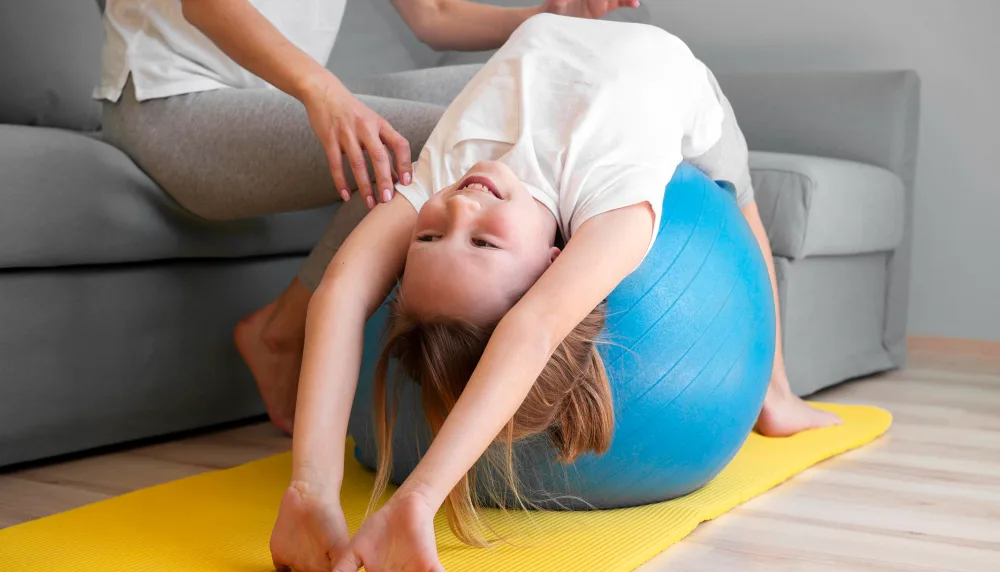
Pediatric physiotherapy in Brampton & Mississauga
KickStart Therapy provides pediatric physiotherapy for babies, toddlers, children and teens in Brampton, Mississauga and the surrounding Peel Region. Our physiotherapists use child-friendly, play-based activities to support movement, strength, coordination, balance and confidence in everyday activities.
Families often contact us when a child is delayed in sitting, crawling or walking; has frequent falls, toe walking, reduced endurance or coordination challenges; or needs support returning to activity. Each plan is tailored to the child and family.
What pediatric physiotherapy can help with
Pediatric physiotherapy, sometimes called pediatric physical therapy or pediatric physio, assesses how a child moves and builds a plan around meaningful goals. Treatment may support gross-motor development, mobility, balance, posture, strength, endurance and participation in play, school and community activities.
We work alongside parents and, when appropriate, other professionals involved in your child’s care. For children who also need help with sensory processing or fine-motor skills, see our pediatric occupational therapy services.
Infant and developmental physiotherapy
Infant and developmental physiotherapy can help when a baby or young child is not reaching movement milestones as expected, shows a strong preference for one side, has trouble with tummy time, crawling or walking, or appears to struggle with balance and coordination.
An assessment looks at your child’s current abilities, comfort and daily routines. We then explain practical next steps and, if treatment is recommended, create goals that are appropriate for the child’s age and needs.
Gross Motor Skill Delays
If your child takes longer to crawl, walk, jump, or run compared to others their age, it may be a sign of a gross motor delay. Physiotherapy helps strengthen key muscles and improve movement patterns through fun and purposeful play. We guide families with simple exercises that can be practiced at home to make progress steady and natural.
Toe Walking
Some children walk on their toes out of habit or due to tight muscles. Over time, this can affect balance and coordination. Through gentle stretching, strengthening, and movement training, physiotherapy helps children place their feet flat and walk with better posture and comfort.
Clumsiness and Balance Troubles
If your child often trips, falls, or struggles with balance, it can make activities like climbing stairs, playing on the playground, or riding a bike difficult. Physiotherapy enhances balance, body awareness, and coordination through engaging movement activities that foster both confidence and control.
Trouble with Endurance
When children tire quickly during play or school activities, it may be due to weak muscles or poor stamina. Physiotherapy helps increase endurance in a gradual, enjoyable way. We use activities that feel like games, so kids build strength while staying motivated and happy.
Poor Posture
Slouching or leaning while sitting or standing can affect breathing, attention, and overall comfort. Our physiotherapy sessions help children develop stronger core muscles and body alignment through fun exercises that encourage better posture without making therapy feel like a chore.
Foot Position When Walking
Sometimes parents notice their child’s feet turning inwards or outwards while walking. This can cause discomfort or lead to uneven wear on shoes. A physiotherapist can assess how the child walks and use exercises or gentle corrections to improve alignment and stability.
Hand-Eye Coordination
When children struggle to catch a ball, write, or complete activities that need timing and control, it can affect school performance and playtime. Physiotherapy helps strengthen these skills through engaging, movement-based games that improve coordination in a relaxed and encouraging way.
How Physiotherapy Benefits Children?
Pediatric physiotherapy helps children strengthen their bodies, improve movement, and gain confidence in their physical abilities. At Kick Start Therapy, each session is built around play, gentle guidance, and family involvement. Here’s how physiotherapy can benefit children:
- Improves Strength and Coordination: Regular sessions help children develop stronger muscles and better body control. This makes activities like walking, climbing, or running more comfortable and enjoyable.
- Builds Balance and Body Awareness: Through playful exercises, children learn how their bodies move and how to maintain stability during daily tasks and games.
- Supports Better Posture and Alignment: Physiotherapy encourages proper sitting, standing, and walking habits, helping reduce strain and improve comfort during school or play.
Enhances Confidence and Independence: As children learn new skills and movements, they begin to feel more confident in their abilities, making it easier to take part in group play and physical activities.
Wondering if physiotherapy is right for your child?
A short call with our team helps you understand what assessment looks like and which therapy fits your child best.
What to expect at a pediatric physiotherapy assessment
At the first appointment, the physiotherapist listens to your concerns and observes how your child moves during age-appropriate activities. You will leave with a clear explanation of the findings, recommended goals and ideas for supporting progress at home.
To ask about pediatric physiotherapy in Brampton or Mississauga, call 905-792-1626 or contact our team.
Why Choose Kick Start Therapy to Start Pediatric Physiotherapy for Your Child?
At Kick Start Therapy, we understand that when parents see their child struggling to keep up with others, it can bring a mix of worry and confusion. Our goal is to make this easier by creating a caring and encouraging space where children can grow stronger through movement, and parents feel supported every step of the way.
Child-Centered Environment
Every child has a distinct personality, and so is our approach. We take time to understand your child’s comfort level, interests, and challenges before planning any activity. Sessions are calm, playful, and designed to help children feel safe and confident. When therapy feels natural and welcoming, children are more open to trying new movements and exploring their abilities without fear or pressure.
Play-based Therapy Sessions
we believe progress happens when children are having fun. Our sessions use play-based exercises, movement games, and creative tasks that build strength and coordination while keeping therapy enjoyable. This helps children stay motivated and engaged while learning new skills. Parents often notice how much easier it becomes for their child to move, explore, and participate in everyday play.
Family Partnership
The involvement of parents is crucial in every child’s progress. We involve families from the start, guiding them through what each exercise means and how it helps. We also share simple, practical ideas that can be done at home during regular routines. This teamwork helps children continue improving outside the clinic and gives parents the confidence to support their child’s growth in small, meaningful ways.
Consistent and Compassionate Support
Our team understands how emotional it can be for parents to watch their child struggle or make slow progress. We stay connected through regular check-ins, celebrating even the smallest improvements. With steady guidance and reassurance, families feel supported, and children gain the confidence to keep moving forward with joy and determination.
Physiotherapy vs. occupational therapy — what's the difference?
Physiotherapy and occupational therapy (OT) are both movement-related therapies, and children are sometimes referred to both, but they target different goals. Physiotherapy focuses on gross-motor movement itself — strength, balance, walking, coordination and physical milestones like crawling, jumping or climbing stairs. Occupational therapy focuses on the skills a child needs for daily activities — handwriting, dressing, feeding, sensory processing and fine-motor coordination.
In practice: if a child is delayed reaching movement milestones, walks on their toes, tires quickly, or has balance and coordination difficulties, physiotherapy is usually the right starting point. If a child struggles with pencil grip, cutting with scissors, sensory sensitivities or daily routines like getting dressed, occupational therapy is typically more appropriate. Many children benefit from both, and our physiotherapists and pediatric occupational therapists coordinate care when a child is seeing both disciplines.
Frequently Asked Questions (FAQs)
At What Age Can Kids Start PT?
Children can begin physiotherapy at any age, even in infancy, if movement development, muscle strength, or coordination seems to be lagging. Early intervention lets them build the needed skills safely and comfortably.
When to See a Pediatric PT?
If your child takes longer than expected to sit, crawl, walk, or shows balance or coordination struggles, it is time to see a pediatric physiotherapist. These are clear signs that extra support can make a difference.
What is the Role of a Pediatric Physiotherapist?
A pediatric physiotherapist evaluates how a child moves, creates a plan to improve strength, balance, and coordination, and guides parents in ways to support progress at home. They focus on enabling ease in daily movement and play.
How Does Pediatric Physical Therapy Work?
Therapy involves fun, age-appropriate activities and exercises designed to build the muscles, balance, and coordination a child needs. Sessions often include play, movement tasks, and family involvement so progress can be carried into everyday routines.
How Long Does It Take to See Results from a Pediatric Physiotherapist?
Improvement can often be seen within a few weeks, but how long depends on the child’s condition, consistency of sessions, and home support. A clear plan and partnership with parents help steady progress.
Wondering if physiotherapy is right for your child?
A short call with our team helps you understand what assessment looks like and which therapy fits your child best.
Occupational Therapy & Physiotherapy
Questions about physiotherapy for your child?
Tell us a bit about your child — our team will be in touch.
Your details stay private — we don't share them with anyone.
Call To Book an Appointment!
Kick Start Therapy provides individualized therapy services using our multidisciplinary team, which consists of
Speech-Language Pathologists, Behavioural Consultants, ABA therapists, Occupational Therapists and many
more rehabilitation therapists.






Why families trust Kick Start Therapy
- Registered OAP provider
- Licensed, college-regulated clinicians
- Evidence-based, individualized therapy plans
- A team of registered SLPs and CDAs
- In-clinic (Brampton & Mississauga) and virtual options
- Parent coaching and guidance included