
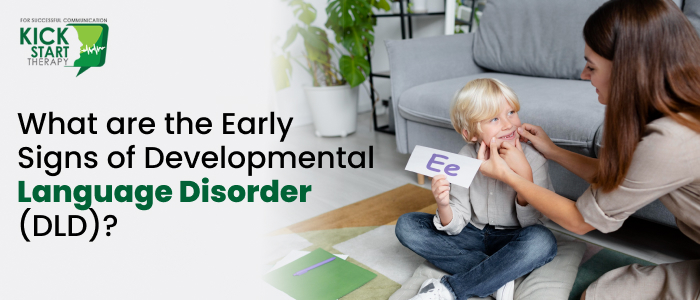
Many parents feel worried when their child struggles to learn or use language, especially when everything else about their development seems typical. It often comes as a surprise because the child has no history of medical issues, no hearing problems, and no diagnosed condition that could affect communication. At our speech therapy centres in Brampton and Mississauga, we meet many families who have the same question: “If my child is healthy, then why is language still so difficult for them?” The truth is that language difficulties can happen even without any known cause and are often recognised as early signs of Developmental Language Disorder (DLD).
The condition is more common than most people realise, yet it often goes unnoticed because parents assume their child will “catch up later.” Early diagnosis is important because timely support can make communication easier and more natural for the child.
In today’s blog, we will talk about the early signs of Developmental Language Disorder, along with causes and treatment options, so parents know what to look for and when to seek help.
What is Developmental Language Disorder (DLD)?
Developmental Language Disorder, commonly known as DLD, is a condition in which a child has ongoing difficulty with language, either understanding it, using it, or both. These challenges appear in early childhood and continue as the child grows.
What makes Developmental Language Disorder different from other communication problems is that it does not come from hearing issues, medical illnesses, or lack of exposure to language. The child is otherwise healthy, active, and learning in all other areas, but language becomes an area where progress is slower than expected.
Children with DLD may struggle to form sentences, use the right words, follow instructions, or express their thoughts clearly. Some children speak later than others, while some speak on time but have trouble putting words together in a meaningful way. As they grow, these difficulties can also show up in reading and writing because language skills form the base for literacy.
What are the Signs of Developmental Language Disorder (DLD)?
The symptoms of Developmental Language Disorder can show up in different ways, and the signs often become noticeable as the child starts using more language. These signs are usually not sudden; they show up gradually as daily communication becomes harder than expected.
Some of the common signs of Developmental Language Disorder include:
- The child may find it hard to follow simple or multi-step instructions.
- They may seem unsure even after hearing something clearly.
- They may take longer to understand questions or everyday conversations.
- The child may struggle to form clear sentences for their age.
- They may pause often while speaking because they are searching for the right words.
- Their sentences may stay shorter or simpler than expected.
- They may find it difficult to learn new words or remember them.
- Explaining a story, event, or idea may feel confusing for them, and the story may not follow a clear order.
- The child may avoid group conversations because speaking feels challenging.
- They may have trouble joining in with peers during play.
- Social situations may feel uncomfortable, especially when a lot of talking is involved.
- Reading and writing may become harder because both depend on language skills.
- The child may take longer to understand classroom instructions.
- They may appear distracted, but often the effort of processing language is what tires them.
- Difficulty understanding figurative expressions like jokes, idioms, or metaphors.
- Challenges with long or detailed reading material.
- Trouble forming complex sentences during conversations.
What is the Common Cause of DLD?
Wondering if your child needs speech therapy?
A short conversation with our team can help you decide whether a screening makes sense for your child.
📞 Call 905-792-1626 to schedule · Learn more about pediatric speech therapy
When families first hear the term Developmental Language Disorder, one of the first questions they ask is, “Why does this happen?” It is a natural question, and the honest answer is that Developmental Language Disorder usually does not have one single, clear cause. In most children, it develops quietly in the background without any obvious trigger. The child grows normally in other areas, but language becomes an area where progress slows down.
Even though we do not have one definite cause, research over the years has shown a few factors that can increase the chances of a child developing DLD.
1. Genetics
When a parent, sibling, or even a close relative has had similar language difficulties, the likelihood of DLD becomes higher. This does not mean that every child in the family will have the same difficulty, but it shows that language development can be influenced by the way genes are passed down. Sometimes, a gene change can happen on its own, without any family pattern, and that can also affect the way the child learns language.
2. Early Development Factors
Some children face certain challenges even before birth or during the newborn period. Babies born earlier than expected or with a low birth weight may have a slightly higher chance of developing language difficulties later. Nutritional factors, such as a deficiency of important vitamins like thiamine (vitamin B1), can also influence early brain development. These early factors do not guarantee DLD, but they can increase the child’s sensitivity to language delays.
3. Co-existing Developmental Conditions
Some children have other developmental conditions that affect how they process information. For example, children with dyslexia or autism may show language learning differences as part of their overall development. In such cases, language difficulties can appear alongside these conditions. When DLD occurs with another condition, the child may receive a combined diagnosis, such as a language disorder linked with dyslexia or a language disorder linked with autism.
How is Developmental Language Disorder Diagnosed?
Diagnosing Developmental Language Disorder takes careful observation and a detailed look at how the child understands and uses language. Since children grow and learn at different speeds, the goal of the evaluation is to understand whether the language difficulties are part of normal variation or whether they point toward DLD.
The assessment includes several steps, each giving a clearer picture of the child’s strengths and needs.
- Direct observation: The specialist spends time watching how the child communicates during play, conversation, and simple activities. This helps reveal how the child uses language in natural situations.
- Parent and teacher input: Parents and teachers share what they see at home and school. Their observations give valuable details about how the child communicates across different settings.
- Language tasks: The child is given age-appropriate tasks to check understanding, vocabulary, sentence use, and the ability to express ideas.
- Standardised tests: These tests compare the child’s language skills to other children of the same age. This makes it easier to see if the child’s development is slower in certain areas.
- Learning ability: Some evaluations include tasks that look at how quickly the child picks up new words or language patterns.
After gathering all this information, the specialist studies the results to see where the child is facing difficulty and whether the overall pattern matches DLD. This detailed approach ensures the child receives the right diagnosis and a treatment plan tailored to their needs.
What is the Best Treatment for Developmental Language Disorder (DLD)?
The most effective treatment for DLD is structured speech and language therapy provided by a trained speech-language pathologist. This professional understands how children learn language and uses targeted techniques to help them build the skills they find difficult.
The treatment plan is always shaped around the child’s age and specific needs. When therapy begins early in life, it helps children catch up on important parts of language that have not developed on time. For young children, sessions often focus on building grammar, improving vocabulary, and helping them learn how to express their thoughts more comfortably. Social communication is another important area, as many children with DLD benefit from guidance on taking turns in conversation, staying on topic, and interpreting simple cues during interaction.
For school-age children, treatment usually expands to support classroom learning. Many children with DLD struggle with understanding instructions, organising information, and keeping up with reading and writing tasks. Therapy helps strengthen these skills by breaking down language into manageable steps and teaching the child how to apply these skills during schoolwork.
Conclusion
Understanding Developmental Language Disorder helps parents recognise when a child’s communication pattern needs attention rather than waiting for them to “grow out of it.” Once the signs are identified early, the right support can bring significant improvement in how comfortably a child learns, interacts, and expresses themselves. With a clear diagnosis and a therapy plan that matches the child’s needs, progress becomes steady and realistic.
For families in Brampton and Mississauga seeking support for language-related difficulties, Kick Start Therapy offers structured, child-friendly speech therapy designed to build strong language skills step by step. Our team works closely with parents, teachers, and caregivers to ensure every child receives the support they need to communicate more comfortably.
FAQs
Is Developmental Language Disorder a Lifelong Condition?
Developmental Language Disorder can continue into adulthood, but with early intervention and consistent speech-language therapy, children learn effective strategies to improve communication and manage challenges confidently.
Is Developmental Language Disorder the Same as a Learning Disability?
No. DLD is specifically a language-based communication disorder. A learning disability affects broader academic skills. However, untreated language difficulties may impact learning over time.
Is DLD a Form of Autism?
No. DLD is not a type of autism. They are separate conditions, though some children can have both. Children with DLD primarily struggle with language, while autism involves broader differences in communication, social interaction, and behaviour patterns.
Can a Child with DLD Lead a Normal Life?
Yes, with the right support, therapy, and home guidance, children with DLD can build strong communication skills, succeed in school, form friendships, and live fulfilling, independent lives.
Can Kids Grow Out of DLD?
DLD doesn’t simply disappear, but children can make significant progress. Early intervention helps them develop age-appropriate language skills and reduces the impact of Developmental Language Disorder as they grow.
Ready to support your child? Book a free consultation with our Brampton & Mississauga team today.