
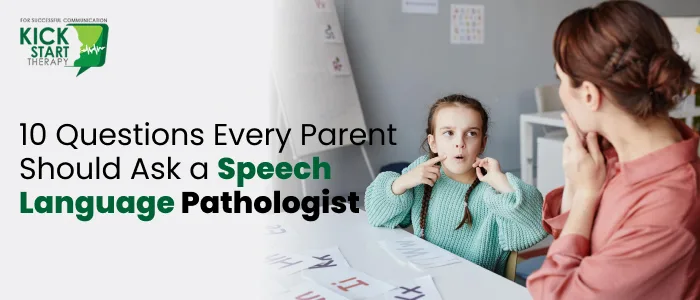
So, it’s your first meeting with a Speech Language Pathologist (SLP) for your child. You might feel anxious, unsure of what to expect, or worried about what they will say. That’s absolutely normal. The best thing you can do is stay calm, focused, and open to understanding what will truly help your child.
As a Speech Language Pathologist myself, and the founder of Kick Start Therapy, I have met many parents who come in with countless thoughts racing through their minds, yet forget or feel hesitant to ask important questions. Therefore, it is always helpful to come prepared with a few questions you’d like to ask during the first appointment.
With all my experience of working with families, I have put together a list of questions that parents should ask a Speech Language Pathologist during their first consultation. These questions will help you gain clarity, set expectations, and start your child’s therapy with confidence.
Who is a Speech Language Pathologist?
A Speech Language Pathologist, often known by the names SLP or speech therapist, is a healthcare professional who helps children and adults with communication difficulties. Communication includes understanding, expressing, and connecting with others.
An SLP looks at how a person speaks, listens, understands words, and uses language in daily life. Some children may experience a speech delay, while others may struggle to put words together, follow directions, or express what they feel. The therapist carefully studies these patterns to see what part of communication needs support.
They also help with voice, stuttering, social communication, and even feeding or swallowing issues. In many cases, therapy begins with play-based activities for children, so learning feels natural and enjoyable. For older kids or adults, the sessions may focus on real-life tasks like talking in class, answering questions, or practicing speech after a medical condition.
Common Parent Questions for a Speech and Language Pathologist
When parents come for a speech therapy consultation, they often carry a mix of concern, curiosity, and hope. Asking the right questions helps them understand their child’s needs. Below are some of the most common and important questions that parents can ask.
1. What Specific Speech or Language Challenges Does My Child Have?
This is often the first and most important question. Every child communicates in a unique way. Some children find it hard to pronounce certain sounds, while others have trouble understanding instructions or putting words together.
More often, parents visit SLPs for speech delay issues. Asking this question helps you understand which part of communication needs extra support. It gives them a clear picture of what the therapist is focusing on and why that area was chosen.
2. How Did You Assess My Child’s Communication Skills?
When you ask this, you are asking the therapist to explain how they observed and evaluated your child’s speech and language. The assessment may involve activities like talking, listening, picture naming, or play.
The therapist studies how your child communicates in natural ways. Understanding the process helps you trust the diagnosis and see how each area connects to your child’s daily life.
3. What Goals are We Focusing on in Therapy?
Therapy works best when parents know what is being targeted. This question helps you understand the main focus of the sessions.
It could be building longer sentences, improving clarity, or helping your child follow directions. When you know the goals, you can support them in everyday situations like reading, playing, or talking at home.
4. How Long Will My Child Need Speech Therapy?
Every parent wants to know how much time therapy will take to show results. The truth is, it depends on your child’s age, condition, challenges, and response to sessions.
Asking this question helps you set realistic expectations. The therapist can guide you on how progress usually shows up and what signs show that your child is moving forward.
5. How can I Support My Child’s Progress at Home?
Therapy works best when it is practiced in familiar spaces. This question opens the door to small daily routines that can make a significant addition to the positive outcomes.
Your child might be asked to play simple games, read stories, or repeat short words during playtime. These activities connect therapy to real life and make learning natural.
6. How will You Measure My Child’s Progress?
This question shows that you want to stay involved. Progress is not always about big leaps; it often appears in small, steady changes.
The speech language pathologist may track how clearly your child speaks, how often they initiate conversation, or how long they can stay engaged. Understanding how progress is tracked helps you celebrate the small wins that lead to bigger ones.
7. What Milestones or Signs Should I Look for between Sessions?
Parents spend the most time with their child, so your observations are valuable. By asking this, you learn what to notice at home that suggests whether your child is improving or not.
When you share these updates with the therapist, it helps fine-tune the plan and adjust the pace of therapy if needed.
8. Does My Child’s Hearing or Sensory Processing Affect Their Speech?
Sometimes children struggle to speak clearly because of hearing issues or sensory sensitivities. Asking this question helps the therapist look at your child’s communication from all angles.
If needed, they might suggest a hearing test or sensory support activities. This ensures that nothing is missed and that your child gets complete care.
9. What Happens in a Speech Therapy Session?
Parents often wonder what really goes on inside the therapy room. Speech sessions are usually interactive and playful, especially for younger children.
Games, storytelling, and visual tools are used to build speech and language naturally. Asking about the session helps you understand that therapy is designed to keep children engaged, not pressured.
10. How will I know if the therapy plan is working?
This question brings reassurance. As therapy continues, you may notice that your child speaks more clearly, uses new words, or communicates with more confidence.
The therapist can explain what progress looks like at each stage and when it is time to update goals. Staying in touch about these changes helps both the parent and therapist to be aligned.
Does Speech Therapy Really Work?
Wondering if your child needs speech therapy?
A short conversation with our team can help you decide whether a screening makes sense for your child.
📞 Call 905-792-1626 to schedule · Learn more about pediatric speech therapy
Yes, speech therapy works, and there is solid evidence behind it. Studies have shown that structured speech therapy leads to steady improvement for most children.
According to the Royal College of Speech and Language Therapists (RCSLT), nearly 79% of children receiving therapy show progress in at least one core area of communication.
Early intervention is important in speech and language therapy. The brain is most adaptable in the early years, which means children respond better when therapy starts sooner. Consistent attendance and simple practice at home multiply the results. Speech therapy does not create change overnight. It works through patience, practice, and teamwork between the therapist, child, and family.
Conclusion
Speech therapy is a gradual but proven way to help children communicate more confidently. Asking the right questions helps parents understand how therapy works, what to expect, and how they can take part in the process. Every child learns at a different pace, so patience and consistency matter as much as the sessions themselves.
At Kick Start Therapy, we focus on creating a supportive environment where each child’s needs are understood deeply before therapy begins. Our team of certified Speech Language Pathologists in Brampton designs structured yet engaging sessions that encourage natural communication and steady progress.
FAQs
What is the Role of a Speech-language Pathologist?
A Speech-language Pathologist helps children and adults who have difficulty speaking, understanding, or communicating effectively. They assess speech, language, and communication skills, and create therapy plans to improve clarity, understanding, and confidence.
At What Age should a Child See a Speech Pathologist?
If a child is not babbling by one year, not using simple words by two, or struggling to form sentences by three, it is best to consult a speech pathologist for an early assessment.
What is a Red Flag for Speech Delay?
Key red flags include limited vocabulary for age, unclear speech after three years, poor response to name or instructions, and frustration when trying to communicate. These early signs should not be ignored.
Is 30 Minutes of Speech Therapy Enough?
Thirty minutes can be effective when sessions are frequent and supported by home practice. Consistency and daily communication activities matter more than the exact session length.
Concerned about your child’s development? Schedule an assessment at KickStart Therapy in Brampton or Mississauga.