
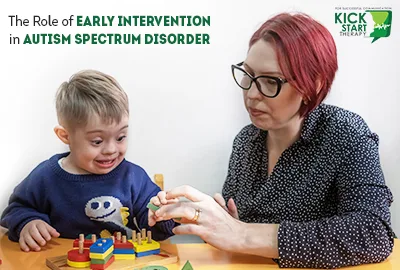
Autism Spectrum Disorder (ASD) can make it harder for a child to communicate, make friends, or respond to what’s happening around them. Signs of Autism Spectrum Disorder often begin to appear during the early developmental years, particularly between the ages of one and three. However, some parents may overlook these early signs, and by the time they notice, opportunities for early intervention may already be missed.
But let us tell you that early childhood represents a period of rapid learning and development. During these years, children absorb patterns from their environment quickly. Early intervention programs aim to support children with autism during this critical developmental window.
If you are still doubtful about the efficiency of early intervention for autism spectrum disorder, this article will explain its key benefits and why acting early can make a significant difference in a child’s growth and development.
What is Early Intervention in Autism Spectrum Disorder?
Early intervention refers to specialized therapeutic support provided to young children who show signs of developmental delays or who have received an autism diagnosis. These services are typically designed for children from birth up to five years of age.
During this stage of development, children are still forming the basic building blocks of communication, behavior regulation, and social interaction. Early intervention programs focus on strengthening these foundational skills.
Several professionals may work together as part of an early intervention program. These may include:
- Behavioral therapists
- Speech and language therapists
- Occupational therapists
- Pediatric physiotherapist
Each professional focuses on a specific area of development while collaborating with others to support the child’s overall progress. Early intervention programs generally focus on several core developmental areas:
- Communication development
- Behavioral learning
- Social interaction
- Attention and engagement
- Daily living skills
Understanding the Importance of Early Brain Development
The early childhood years represent one of the most active periods of brain growth. During the first few years of life, the brain forms connections at a very rapid pace. These connections support learning, memory, communication, and behavior regulation.
This ability of the brain to adapt and build new pathways is often referred to as neuroplasticity. During early childhood, neuroplasticity allows children to learn new patterns more easily. Communication systems, social responses, and behavioral habits are still developing. Because these patterns are not yet fully established, therapy can guide the brain toward more effective learning pathways.
In early intervention programs, structured activities help children practice skills such as responding to their name, maintaining eye contact, or using gestures to communicate needs. Repetition and consistent practice gradually strengthen these learning pathways.
Key Benefits of Early Intervention for Autism Spectrum Disorder
Considering therapy for your child with autism?
Our multidisciplinary team — ABA, speech, occupational therapy — works together under one roof. A short call helps you understand what the right next step looks like.
📞 Call 905-792-1626 to schedule · Learn more about our autism therapy services
Early therapy programs support many aspects of development. Progress does not always occur in a straight line, and each child uniquely responds to therapy. However, certain developmental improvements are commonly observed when structured support begins early.
Improved Communication Skills
Communication delays are often one of the earliest developmental differences associated with Autism Spectrum Disorder. Some children may speak very few words. Others may not use gestures such as pointing or waving. In some cases, children repeat words without using them to express meaning.
These challenges can create frustration. A child who cannot express basic needs may respond with crying, withdrawal, or repetitive behaviors. Speech therapy focuses on helping children develop ways to express themselves more clearly.
Better Social Interaction
Social interaction skills develop gradually during early childhood. Young children typically learn to look toward faces, follow gestures, and respond when caregivers call their name. These behaviors form the foundation for later social relationships.
Children with Autism Spectrum Disorder may experience difficulty with these early social behaviors. Eye contact may be brief or inconsistent. Shared attention may be limited. Some children may not respond when another person attempts to interact with them.
Development of Daily Living Skills
Daily routines form a major part of childhood development. Young children gradually learn how to eat independently, follow bedtime routines, and participate in simple household activities. These daily tasks help children develop independence and predictability.
Some autistic children experience difficulty with routine-based learning. Sensory sensitivities may affect eating habits. Changes in routine may cause distress. Following multi-step instructions can feel overwhelming. Early intervention programs often incorporate daily living skills into therapy sessions.
Reduction in Challenging Behaviors
Challenging behaviors in Autism Spectrum Disorder are often connected to communication or sensory difficulties. A child who cannot communicate needs may express frustration through crying, hitting, or throwing objects. Loud environments may trigger distress. Sudden changes in routine can lead to emotional reactions.
Early intervention focuses on understanding the purpose behind these behaviors. Therapists observe patterns carefully. A child may become upset during transitions between activities. Another child may react strongly to loud sounds. Some behaviors may appear during situations that require communication. Once these patterns are understood, therapy focuses on teaching alternative responses.
Stronger Academic Readiness
Preschool and early school environments require several developmental skills. Children are expected to sit for short periods, listen to instructions, follow routines, and interact with peers. These expectations can be difficult for children with Autism Spectrum Disorder who have not yet developed foundational learning behaviors.
Early intervention helps children practice the skills needed for structured learning environments. Therapy sessions often include:
- Sitting during structured activities
- Responding to simple instructions
- Participating in group routines
- Practicing attention during tasks
These experiences help children become more comfortable with classroom expectations. As children develop these skills, transitions into preschool settings often become smoother.
Common Therapies Used in Early Autism Spectrum Disorder Intervention
Early intervention programs typically combine several therapy approaches. Each therapy focuses on specific areas of development while supporting the child’s overall learning progress.
Applied Behavior Analysis (ABA)
Applied Behavior Analysis is one of the most widely used approaches in early Autism Spectrum Disorder intervention. ABA therapy focuses on helping children learn new skills through structured teaching and repetition. Complex behaviors are broken into smaller learning steps so children can practice each part gradually.
Positive reinforcement encourages children to repeat successful behaviors. Therapists may work on skills such as:
- Responding to the name
- Following simple instructions
- Identifying objects
- Using words or gestures to request items
- Participating in structured activities
Speech Therapy
Speech therapy focuses on developing communication abilities. Some children require support with spoken language. Others may need help understanding language or learning alternative communication systems.
Speech therapists may work on:
- Developing early sounds and words
- Expanding vocabulary
- Improving understanding of instructions
- Encouraging conversational skills
- Using visual communication tools
Communication development often improves gradually through consistent therapy sessions.
Occupational Therapy
Occupational therapy helps children develop practical skills used in daily life. Many autistic children experience sensory processing differences. Certain textures, sounds, or movements may feel uncomfortable or overwhelming.
Occupational therapists support children by helping them develop:
- Fine motor skills for handling objects
- Sensory regulation strategies
- Hand coordination for daily activities
- Self-care routines such as dressing or feeding
Social Skills Training
Social skills training focuses on helping children understand interaction patterns. Therapists may practice:
- Turn-taking during play
- Recognizing facial expressions
- Participating in group activities
- Responding to social cues
These skills develop gradually through guided practice and repeated interaction.
Pediatric Physiotherapy
Pediatric physiotherapy supports children in developing gross motor skills such as walking, running, balance, and body coordination. Children with Autism Spectrum Disorder sometimes show delays in motor planning, posture control, or muscle strength.
Physiotherapists use exercises, movement-based activities, and balance training to improve physical abilities. Early physiotherapy can make participation in play and daily activities easier and more enjoyable.
Conclusion
Early intervention does not eliminate Autism Spectrum Disorder, but it significantly changes how developmental challenges are addressed. When structured therapy begins during early childhood, many children gain communication skills, develop social interaction abilities, and learn practical routines that support daily life.
Small changes in communication, attention, and interaction can create meaningful improvements in how children experience the world around them. Meanwhile, Kickstart Therapy provides tailored autism therapy services, combining clinical expertise with individualized support to help children build these foundational skills effectively.
FAQs
What are the Early Interventions for Autism?
Early interventions for autism include therapy programs designed to support communication, behavior, and developmental skills in young children. These programs often involve Applied Behavior Analysis (ABA), speech therapy, occupational therapy, and structured social interaction training.
Take the first step. Book an appointment with our certified therapists in Brampton & Mississauga.