
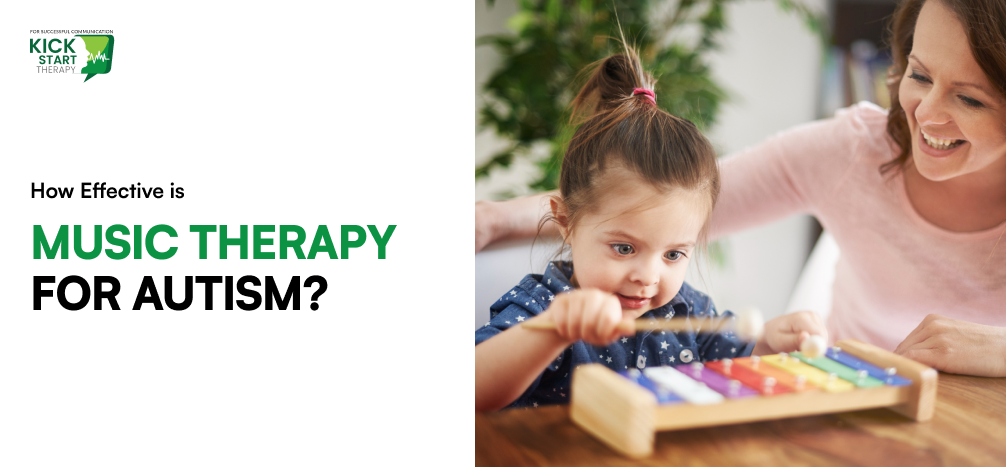
What does music do to you? It works like a therapy to instantly refresh the mood, energise, calm the mind, and make a person feel happier. But what does music do to a child with autism? Just like us, music has the same impact on people with autism. The effectiveness of music therapy for autism is widely evidenced, with multiple studies confirming its positive influence on emotional regulation, attention span, social interaction, and communication skills.
Even several scientific studies have indicated that listening to music releases dopamine (boosting mood) and reduces cortisol (lowering stress), which directly enhances cognitive function, neuroplasticity, and emotional well-being.
If you still wonder how music helps in autism therapy, understanding the science and real-world impact behind it can clear all your doubts.
What is Music Therapy for Autism?
Music therapy for autism is a structured therapeutic interaction where sound becomes a medium for emotional expression, regulation, and shared attention. Sessions are usually guided by a trained therapist who watches the child’s arousal levels closely.
Therapists often use specific rhythmic patterns to help regulate arousal levels, especially for children who fluctuate between high agitation and emotional withdrawal. Repetition creates familiarity, which reduces cognitive load to keep the child engaged. Through this non-verbal communication, children respond through eye contact, body movement, vocalisation, or shared timing rather than words.
To support a broader range of developmental goals, therapists usually integrate music therapy with Applied Behaviour Analysis (ABA therapy) and occupational therapy. ABA therapy provides behavioural structure and skill-building, and occupational therapy addresses autism and sensory integration. This holistic approach makes the progress more natural and less effortful for the child.
How Can Music Help Children with Autism?
Before specific outcomes are noticed, music often creates a pause in a child’s internal overload. Music Therapy for Autism does not force interaction but allows the nervous system to settle enough for learning and communication to become possible.
Emotional Regulation and Behaviour
Emotional regulation in autism develops slowly and unevenly, often influenced by sensory thresholds and environmental stress. Music therapy techniques for autism support regulation by offering predictable patterns that the brain can anticipate.
Rhythm provides a steady external structure, which helps children who struggle with internal regulation feel less reactive. Over time, the progress looks in behaviours like fewer meltdowns, shorter recovery periods after distress, and improved tolerance for frustration during daily routines.
Communication and Language Development
For many children on the autism spectrum disorder, verbal language feels effortful. Music therapy for autism supports communication by removing pressure around speech and replacing it with shared sounds.
Singing, humming, or rhythmic vocalisation allows expression without the demand for correct words. This often leads to increased spontaneous sounds, improved vocal control, and more purposeful attempts at communication.
Social Interaction and Engagement
Social engagement often depends on emotional safety. Music creates shared timing, which naturally invites turn-taking and joint attention without explicit instruction. In therapy settings, children who avoid eye contact or shared play often tolerate brief social moments when rhythm guides the interaction.
Over time, this shared musical experience builds trust, making social presence less threatening. This is how rhythmic regulation in autistic children supports relational development, as predictable beats replace unpredictable social cues, allowing interaction to feel manageable.
Attention Span and Cognitive Skills
Sustained attention can be difficult when sensory input feels overwhelming. Music therapy for autism supports attention by organising sensory input into patterns the brain can follow. Rhythm anchors focus, while melody maintains interest without overstimulation. This often results in longer engagement with tasks, improved sequencing skills, and better memory recall during learning activities.
Families notice that children become more available for structured play or classroom activities after consistent music-based sessions, as attention feels supported rather than forced.
Sensory Integration and Motor Skills
Many autistic children experience uneven sensory processing, where certain sounds, movements, or textures feel intolerable. The therapeutic use of sound and rhythm allows gradual exposure within a controlled, emotionally safe space.
Music supports motor planning through coordinated movement, clapping, or instrument play, which strengthens body awareness and bilateral coordination. Over time, this can translate into smoother movements, better posture, and increased confidence in physical activities, supporting daily functional independence.
What Research Says About Music Therapy for Autism?
Wondering whether ABA is the right fit for your child?
Every child is different. An assessment with our team helps clarify which therapies — alone or combined — would best support your child.
📞 Call 905-792-1626 to schedule · See our ABA & autism programs
Clinical observations around the effectiveness of music therapy for autism have long been supported by neurological research. A 2018 study involving children aged 6 to 12 found that those participating in music therapy showed increased enjoyment, confidence, and social willingness.
Research also highlights how music affects brain regulation in autism. Children on the spectrum often experience heightened neural activity, making self-regulation difficult. Music therapy for autism has been shown to support better modulation of this activity, particularly in regions associated with learning and memory, such as the hippocampus. Increased activity here supports cognitive flexibility, which helps children adapt to new tasks and environments with less distress.
The thalamus, responsible for alertness and sensory processing, also shows improved regulation with consistent music-based intervention for autism spectrum disorder. This change often appears as better awareness without hyper-reactivity.
Additionally, increased activation in frontal-motor regions has been linked to improved coordination and motor planning. These neurological changes support everyday functional tasks such as walking, eating, and object manipulation.
How Long Does It Take to See Progress from Music Therapy?
There is no fixed timeline to see the progress from music therapy. Early sessions may appear unresponsive, especially for children who are initially cautious or sensory defensive. Some children show changes in regulation within weeks. Others take months before any noticeable shift appears. Progress rarely follows a common timeline.
Consistency matters more than frequency. Short, regular sessions integrated into broader therapy plans tend to be more effective than intensive bursts. Music therapy usually alters internal states first. External behaviours change later, sometimes much later.
Conclusion
The effectiveness of music therapy for autism holds its value not because it promises transformation, but because it supports regulation in a way that respects a child’s nervous system. Over time, rhythm and melody become familiar anchors, helping children feel safer within the environments. This safety allows emotional regulation to stabilise, communication to emerge naturally, and social engagement to feel less demanding.
When music therapy is combined thoughtfully with ABA and occupational therapies, children often show steadier progress across emotional, sensory, and developmental areas. These changes are rarely dramatic, but they are meaningful, shaping daily routines, relationships, and learning readiness in lasting ways.
Meanwhile, Kick Start Therapy offers specialized autism therapy grounded in real-world clinical understanding. This integrated approach supports children not just during sessions, but across home, school, and community environments, where regulation and emotional safety matter most.
FAQs
Does Every Autistic Child Respond to Music Therapy?
No, some children show minimal response. Others respond intermittently. Lack of response does not indicate inability or resistance. It often reflects sensory thresholds or timing.
Can Music Therapy Replace Speech or Behavioural Therapy?
It does not replace other therapies. It supports regulation and engagement, which can make other interventions more effective.
Why do Some Children Stop Responding after Initial Improvement?
This is commonly due to nervous system adaptation. Therapists usually adjust pacing, complexity, or session structure rather than increasing stimulation.
How is Progress Measured in Music Therapy for Autism?
Progress is observed through changes in emotional regulation, engagement, communication attempts, and daily functional behaviour rather than isolated performance outcomes.
Take the first step. Book an appointment with our certified therapists in Brampton & Mississauga.